

Category
TIG Welding Machine
Choosing a TIG welding machine comes down to two decisions: DC or AC/DC, and how much amperage you actually need. DC covers mild steel, stainless, copper and chrome moly. AC/DC adds aluminium, because the alternating current strips the oxide layer that DC cannot touch. If aluminium is anywhere in your work, buy AC/DC from the start.
✓ Since 2002
✓ In-house torch workshop & repairs
✓ Air Products gas agent
✓ Direct pricing, no reseller markup
✓ Kempton Park
Every TIG welding machine below is in stock in Kempton Park and priced direct, with no reseller markup. The range runs from entry-level 200A DC inverters for steel and stainless, through AC/DC pulse machines for aluminium, to portable units light enough to carry to site on a single-phase 220V plug.
We have built and repaired TIG torches in our own workshop since 2002, and we are an Air Products gas agent. Buy the machine, the argon and the consumables in one place. And when your TIG welding machine needs service, the people who sold it to you are the people who fix it.

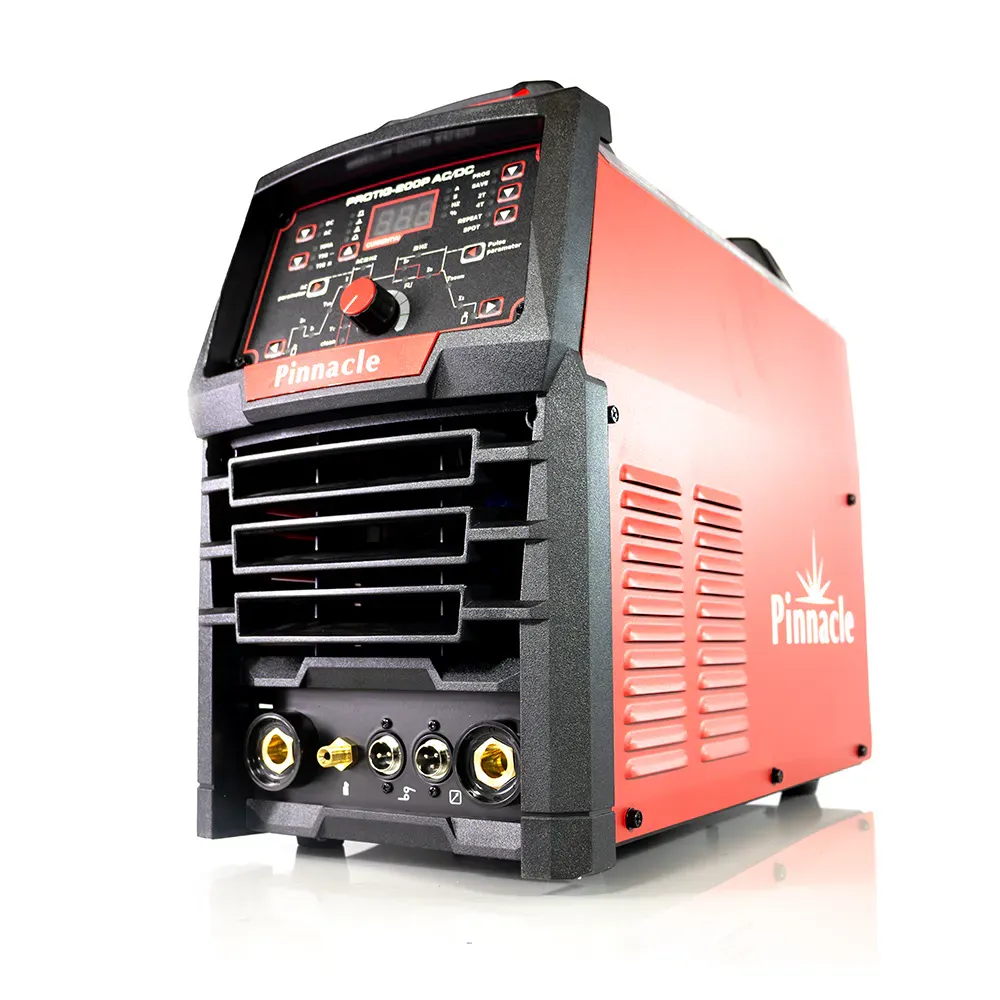

DC or AC/DC — make this call first
DC-only TIG machines weld mild steel, stainless steel, copper and chrome moly. They're cheaper, simpler, and enough for most fabrication and repair work. AC/DC machines add aluminium: the alternating current strips aluminium's oxide layer, which DC current physically cannot do. There is no setting, no filler rod and no technique that gets a DC machine welding aluminium. If aluminium is anywhere in your work now or likely within a year, buy AC/DC from the start — upgrading later costs far more than the difference today.
What amperage do you actually need?
Match the machine to the thickest material you will realistically weld, not the thickest you can picture. A 200A machine handles the overwhelming majority of workshop and fabrication work — sheet metal, tube, light structural, stainless and aluminium up to around 6mm. 250A and above is for heavy plate, thick aluminium and long production runs where duty cycle matters more than peak output.
Duty cycle is the number most buyers ignore and later regret. A machine rated 200A at 60% duty cycle can weld for six minutes in every ten before it needs to cool. If you're running long passes or production work, duty cycle matters more than the headline amperage.
Portable or workshop machine?
Modern inverter TIG machines are dramatically lighter than the transformer units they replaced — many 200A machines now weigh under 15kg and run off a standard single-phase 220V plug. If you work on site, in the field, or move between jobs, a portable inverter is worth prioritising over raw amperage. Check the input voltage and plug type before you buy: a machine that needs three-phase power is no use in a home workshop.
TIG only, or multi-process?
Every TIG welding machine on this page also runs stick (MMA) from the same unit, so you get TIG and stick in one machine without buying a second unit. None of them add MIG — if you need MIG as well, see our multi-process welding machines instead. The trade-off against a dedicated TIG-only unit is fine arc control at the top end: if TIG finish quality is the whole point of the purchase, buy dedicated TIG; if covering stick jobs too matters more, every machine here already does both.
What you'll need beyond the machine
A TIG machine on its own won't weld. Budget for argon gas and a regulator, tungsten electrodes matched to your current type, filler rod matched to your parent metal, and a decent auto-darkening helmet. We stock all of it, and as an Air Products gas agent we can sort your argon supply at the same time — which saves you sourcing it separately after the machine arrives.
Common questions
What is the difference between MIG and TIG welding?
MIG feeds filler wire automatically through the torch, making it faster and easier to learn — best for thicker steel and production work. TIG feeds filler rod by hand while you control heat with a foot pedal or torch control, giving far finer control and a cleaner finish. TIG is slower but produces the better-looking weld.
Is TIG welding hard for beginners?
TIG is the hardest common welding process to learn because you control the torch, the filler rod and the heat simultaneously. Most beginners get usable welds on mild steel within a few hours of practice, but aluminium takes considerably longer. Start with a DC machine on steel, and add aluminium once your torch control is steady.
Can you TIG weld without gas?
No. TIG always requires a shielding gas — normally pure argon. Without it the tungsten electrode oxidises immediately and the weld pool contaminates. Gasless welding is possible with MIG using flux-cored wire, but there is no gasless equivalent for TIG.
What is TIG welding used for?
TIG is used where weld appearance and precision matter: stainless steel fabrication, aluminium work, thin sheet metal, exhaust and tube work, food-grade and pharmaceutical piping, and repairs on visible or critical components. It is the process of choice whenever the weld will be seen or must pass inspection.
What is the difference between a DC TIG welder and an AC/DC TIG welder?
DC-only machines weld mild steel, stainless steel, copper and chrome moly. AC/DC machines add aluminium — alternating current breaks down aluminium's oxide layer, which DC cannot do. If you need to weld aluminium, AC/DC is essential, not optional.
How much does a TIG welding machine cost in South Africa?
Entry-level DC TIG inverters start around R4,500. AC/DC machines capable of welding aluminium typically run from about R10,000, and higher-amperage AC/DC pulse machines reach R28,000 and above. Budget separately for argon, a regulator, tungsten, filler rod and a helmet.
What size TIG welding machine do I need?
A 200A machine covers most workshop and fabrication work, including stainless and aluminium up to roughly 6mm. Choose 250A or higher only for heavy plate, thick aluminium or long production runs. Check the duty cycle as well as the amperage — a low duty cycle means frequent cooling stops.
Can one machine do both TIG and stick welding?
Yes, every TIG welding machine in this range also runs stick (MMA) from the same unit, so you get TIG and stick without buying a second machine. A dedicated TIG-only unit can still offer finer arc and pulse control at the same price, but if your work mixes TIG and stick, one combined machine already covers both.
Can't find what you need?
WhatsApp us the spec. If we don't have it on the site, we probably have it in the workshop.